FOR IMMEDIATE RELEASE
“Microchips That Shook the World” Explores the Engineering and Intrigue Behind Some of History’s Most Important Integrated Circuits
Bethlehem, PA — This winter, visitors to National Museum of Industrial History will have the opportunity to learn more about the hidden heroes powering everything from our computers and phones to our home appliances, cars, and medical devices: microchips.
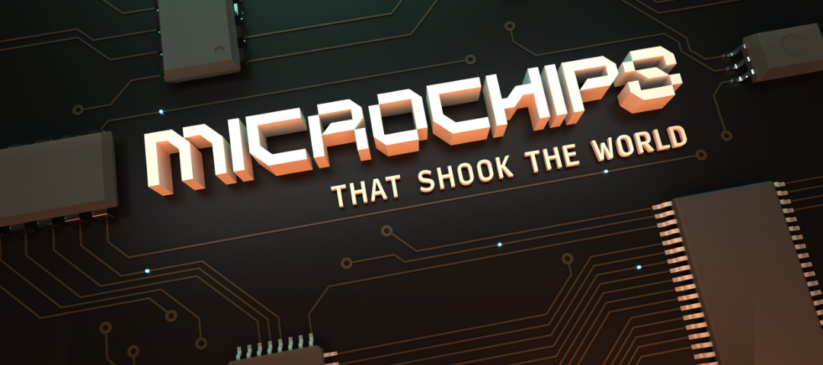
Opening January 18th, “Microchips That Shook the World” is a highly mobile, interactive exhibit from IEEE, the world’s largest technical professional organization dedicated to advancing technology for the benefit of humanity, through the IEEE Global Museum. The exhibit is presented in partnership with IEEE Spectrum and IEEE Foundation, with philanthropic support from ASML, the IEEE Electronics Packaging Society, the IEEE Electron Devices Society, the Bill and Dianne Mensch Foundation, and other generous donors.
Featuring an impressive display of microchips and artifacts dating back to the 1970s, “Microchips That Shook the World” explores how microchips function and the vital roles they play in electronic technology. Guests can take an up-close look at the first single-chip speech synthesizer, which made possible Texas Instruments’ educational Speak & Spell toy, and contemplate how far photography has come by gazing at the image sensor at the heart of the first Kodak digital camera.
“Chips do so many things in our lives, but they’re always hidden away. ‘Microchips That Shook the World’ makes them visible, literally and figuratively,” says Kathleen Kramer, 2025 IEEE President & CEO. “This exhibit promotes awareness of how technological progress unfolds over generations and how engineers and researchers can build on past achievements to improve people’s lives.”
The exhibit breaks down the basics of each of seven functional categories of microchips—Processors, MEMS and Sensors; Memory; Interfacing; Logic; Wireless; and Amplifiers and Audio—and showcases an example of each alongside real-word products it enabled. Interactive components such as a magnifier rail and a transistor simulation offer visitors a rare chance to look inside a microchip and experience how an integrated circuit works.
“Many people are aware that microchips are essential to our electronic devices,” says Harry Goldstein, editor in chief, IEEE Spectrum. “But few actually understand what they do or know the story of how they were invented—and the stories are truly compelling. One goal of this exhibit is to open up the rich world of rivalries, gambits, and grand designs hidden behind the plastic packaging and metal contacts.”
Visitors will be engrossed by the stories of intriguing figures in engineering who were behind the invention of microchips that shaped our technological society. Guests will encounter:
- The ubiquitous FM radio chip that inspired a thousand gadgets in the 1980s because one factory manager went rogue
- The humble 555 timer chip—designed by hand 50 years ago, yet still in mass production because every electronics engineer will use it at one time or another
- The microchip that became the main brain of ridiculously seminal computers like the Commodore 64
- And other chips with cryptic names, like “KAF-1300” and “PIIX3,” that made possible iconic retro products visitors will remember or recognize from their own lives.
These microchips have forever transformed the functionality and flexibility we have come to expect from our devices. At “Microchips That Shook the World,” visitors can gain a whole new perspective on the technological heroes that keep modern life powered up, connected, and humming away.
Exhibit included with museum admission, visit nmih.org for more information. IEEE members and ASML employees showing identification can receive free admission.
About NMIH
A Smithsonian Institution-affiliate, the National Museum of Industrial History is dedicated to preserving America’s rich industrial heritage. Housed in an 18,000-square-foot, 110-year-old former Bethlehem Steel facility on the largest private brownfield in America, the Museum is home to exciting exhibits, engaging programs and amazing history.
Media Contact: Anthony Lopez, Manager of Marketing & Communications, National Museum of Industrial History, [email protected], 484-425-7905
About IEEE
IEEE is the world’s largest technical professional organization and is a public charity dedicated to advancing technology for the benefit of humanity. Through its highly cited publications, conferences, technology standards, and professional and educational activities, IEEE is the trusted voice on a wide variety of areas ranging from aerospace systems, computers and telecommunications to biomedical engineering, electric power and consumer electronics. Learn about IEEE, IEEE Foundation, IEEE Spectrum, and the IEEE Global Museum.